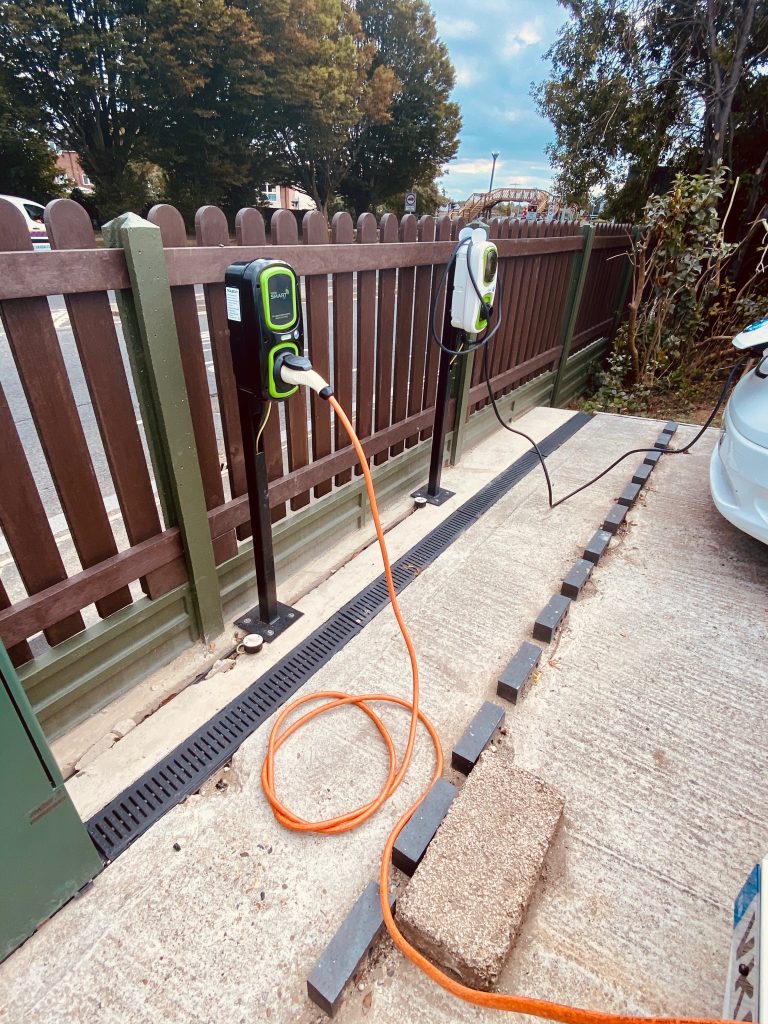
EV charger installation in Birmingham
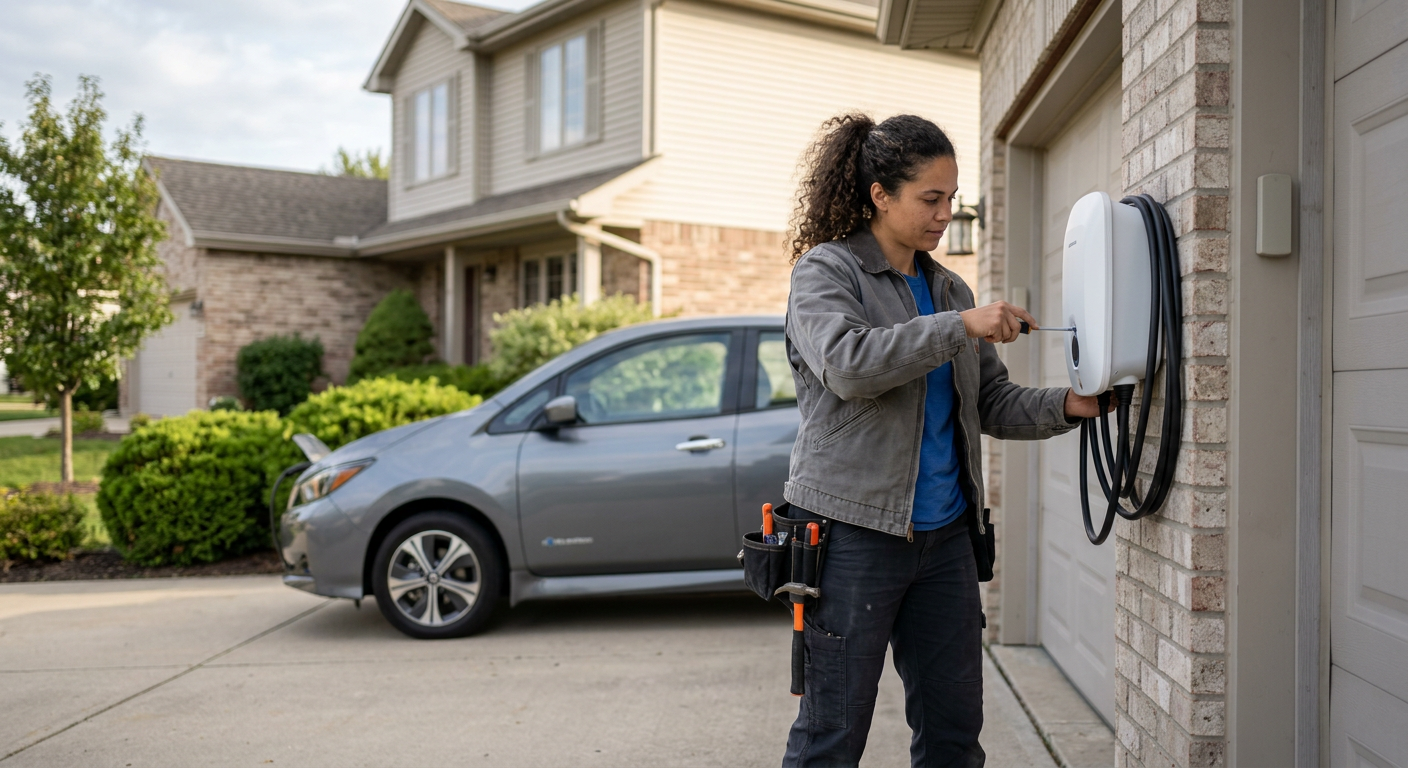
If you want a home wallbox in Birmingham, start with the charger catalogue then get a quote. We pass the enquiry to opted-in OZEV-authorised electricians. We do not promise a number of quotes, a reply time, NICEIC coverage, or a public installer list for this city. This is a form, not a browse list — quotes online vs an installer directory.
A Birmingham wallbox still needs a parking place the cable can reach. Many streets are terraces with the car on the road. Many others are semis with a front drive. If you only have on-street parking, read installing without a driveway and the GOV.UK cross-pavement grant, not a driveway install.
We do not publish typical install prices for Birmingham, a ward average, or a band for one part of the city against another. The electrician itemises the unit, the cable run, any consumer-unit work, and certification. Catalogue From figures are hardware RRP, not a fitted total. How much an install costs is the UK page for that quote. There is no Birmingham fitted price here.
Parking and reach in Birmingham housing
“Birmingham” is not a property type. The first question is where the car parks, and whether a cable can reach that place without becoming a permanent trip hazard across a public highway.
The city’s housing is mixed. Inner streets include long runs of terraces. Further out, including in Sutton Coldfield, semi-detached houses with a front garden are common. The city centre includes flats, and so do some converted houses. The address decides which one you have. This page is not a survey of every ward.
What can still be a private wallbox:
- A driveway, front garden, paved bay, or rear alley the lead can reach without crossing the highway.
- A house wall, or a small attached store, next to that parking place.
- An allocated bay you have a legal right to, with written consent from whoever controls the bay and the route.
- A private garage or carport that belongs to the home.
What is not:
- A trailing lead over the pavement as a permanent solution.
- A permit bay, or a visitor space, treated as off-street parking.
- A unit on the bay window because the street is busy.
- A charger clipped onto an existing communal socket.
A terrace still needs off-street reach. An allocated bay in a block is a flat question. A house with a driveway is a normal dedicated circuit. It is still not a published Birmingham price.
How far the charger sits from the fuse box is the install cable. There is no printed metre limit, and a Birmingham address does not shorten the run. Tethered vs untethered is the separate lead from the wallbox to the inlet. A longer lead does not make a pavement crossing lawful. If there is no suitable wall, see posts and pedestals. The catalogue is wallboxes. We do not list a pedestal SKU.
Planning sits with Birmingham City Council
Birmingham City Council is the local planning authority. Sutton Coldfield is inside that council. Solihull and Sandwell are different councils. A B postcode is not the city boundary: some B postcodes sit in Solihull or Sandwell. Name the council area on the quote form, not only “Birmingham” or a B postcode. A postcode shows which electricians have opted in. It does not file a planning application, and it does not make the neighbouring council the decision-maker.
In England a wall-mounted unit on lawful off-street parking can be permitted development if it meets the current GPDO conditions. The Planning Portal summarises Schedule 2, Part 2, Classes D and E of the 2015 Order. For a wall-mounted outlet in an area lawfully used for off-street parking, development is not permitted if the outlet and its casing would exceed 0.2 cubic metres, sit on a scheduled monument, or sit within the curtilage of a listed building. The old “faces onto and within 2 metres of a highway” limit was removed on 29 May 2025. Do I need permission? covers upstand height caps and the duty to remove the unit when it is no longer needed.
Listed curtilage sits outside that right. Listed-building consent may also be required. An article 4 direction can remove permitted development in a conservation area. How often that happens on a Birmingham street is not stated here. Ask Birmingham City Council. A lawful development certificate is a council product. We do not publish a rule for each ward, and we do not file the application. Scotland, Wales, and Northern Ireland use their own systems. This page is England.
A new driveway that crosses the pavement is a separate highways decision. It is not the same form as permitted development for the wallbox. The dropped-kerb section below is that decision.
Flats, leasehold, and managing agents
A Birmingham flat can take a private wallbox if you have a clearly defined off-street space you have a legal right to, and written consent from whoever controls that space and the cable route. Installing in a flat is the matching page. A city-centre block and a flat in a converted house are the same question.
That person is often the freeholder or the managing agent, even when you own the lease. If you rent, you need the landlord’s written consent. A standard tenancy does not include a right to add a wallbox. Can renters get a charger? is the matching page. GOV.UK’s eligibility page says you must have proof of those rights and permissions before the install.
An allocated bay, or a garage that belongs to the flat, can still be the parking place. A visitor bay does not become private off-street parking because you park there most evenings. A trailing lead across a shared walkway is not a permanent fix.
A communal car park is a different product. The landlord or management company may be the applicant on the landlord grant instead of you. Shared supplies, and who pays for the circuit, sit with the electrician and whoever controls the car park. Some catalogue rows are marked load-balancing. That flag is not a rule for every Birmingham block. We do not publish a list of managing agents. Say whether consent is already in writing, and whether the consumer unit is in the flat or a shared cupboard.
Terraces, semis, and the cable run
Some Birmingham terraces have a rear alley — locally, an entry — or a front garden the cable can reach. Many do not. Terraced houses is the matching page. It is not a rule that every terrace has no driveway, and it is not a rule that every semi has one. The electrician prices the route from the consumer unit to the bay.
What usually changes the job:
- A rear entry or a side return next to the board can be a short surface run.
- A front chase, a cavity run, or a feed to a yard store is a different route.
- The consumer unit may sit under the stairs or in a rear kitchen, not beside the front bay.
- A semi with a short front drive can still have a long run if the board is at the back of the house.
A terrace or a semi does not automatically need a new consumer unit, and a modern-looking house does not automatically have a spare way for a 32 A circuit. Whether the fuse box needs work is the survey. Hidden costs covers a longer route. If you rent, or a freeholder controls the garden, you still need written consent. In a conservation area, article 4 can remove permitted development. Check with Birmingham City Council.
On-street parking, dropped kerbs, and cross-pavement solutions
If the car only parks on the street, this is an on-street problem, not a unit on the bay window. Installing without a driveway is the matching page. We do not sell gullies or run lamppost schemes.
Three different things get mixed up:
- A cross-pavement solution, such as a gully, plus a wallbox on your private wall. We do not cut the pavement.
- A council lamppost chargepoint. That is a public post, not a private wallbox we quote.
- A trailing lead across the pavement. That remains a trip hazard on the highway.
GOV.UK is explicit that not every local authority approves cross-pavement solutions. A Birmingham address does not mean a gully has already been agreed. Highway consent sits with Birmingham City Council as the highway authority, and it can be a different council desk from planning permission for the unit. You must not install a gully on the public road yourself.
A gully does not reserve the bay. The on-street grant page says the grant does not give exclusive use of that space. A permit bay is not off-street parking. Say if the council has already agreed a crossing, and ask who prices the gully. A gully fee is not quoted here.
Creating a driveway is a different application again. Birmingham City Council’s dropped-kerb page and its Dropped Crossings Policy (2026) say only the council can authorise a vehicle crossover, and the work is carried out by the council’s contractors. The Highways Act 1980 makes it an offence to drive across the footway where there is no proper crossover. The crossing stays public highway. It is not part of your land, and it must not be used as a parking space.
The published minimums, if you are applying for that crossover, are a driveway already in place at least 4.75 metres deep from the back of the footway, so the vehicle does not overhang the pavement, and a standard crossing 2.75 metres wide. The council also says planning permission is likely on a classified road, and that resurfacing a private driveway of over 5 square metres needs permission where rainwater would run straight onto the road. We do not apply for the dropped kerb, and a council fee for it is not quoted here. A dropped kerb is not an OZEV grant, and it is not the wallbox.
In February 2025 Birmingham City Council announced a pilot of lamppost chargepoints on residential streets where off-street parking is limited. The announcement described 560 points on 82 streets. That is a public chargepoint on the highway, run with an operator. It is not a private wallbox on your house, and it does not reserve the bay in front of it. We do not take bookings for those posts.
The Clean Air Zone is not a home charger
Birmingham has a Class D Clean Air Zone. Brum Breathes describes it as the area within the A4540 Middleway, not the Middleway itself. It does not cover the rest of the city. A house in Sutton Coldfield, or a terrace outside that ring, is not inside the zone because the address says Birmingham. GOV.UK’s Clean Air Zone guidance lists Birmingham as Class D.
Fully electric vehicles are not charged to drive in the zone. A petrol car that meets Euro 4, or a diesel that meets Euro 6, is also outside that charge. The exemption is about the vehicle. It does not give you off-street parking, a reserved bay, or permission to fix a wallbox.
The zone is not planning permission, not a DNO notice, and not an OZEV grant. Living inside it does not reopen a homeowner grant for a driveway wallbox. The original national homecharge scheme for owner-occupiers in houses closed in 2022. This page does not publish the zone’s daily charge, and it does not file an exemption. Check the vehicle on the official pages if you need that fee.
DNO notification is the electrician’s job
For a Birmingham address, the distribution network operator is National Grid Electricity Distribution (West Midlands). NGED’s West Midlands licence covers the west of the West Midlands conurbation, including Birmingham. That company owns the local wires and the cut-out. DNO notification is the electrician’s job for the supply that serves the property. We do not file the notice.
Your energy supplier is who you pay for units. Telling the supplier you bought a wallbox is not that filing. It is also not planning permission, and it is not an OZEV grant.
The council’s dropped-kerb page still names Western Power as an example of who maintains electricity apparatus in the footway. Western Power Distribution is the previous name of this operator. The notice still goes to National Grid Electricity Distribution.
An address on the edge of the city can sit with a different operator. NGED’s postcode search asks for a full postcode. GOV.UK also points to the ENA Who’s my network operator? tool. The electrician still files it. A home DNO fee is not quoted here.
GOV.UK’s connection guidance is that installers use the Energy Networks Association process. Connect and notify means they fit the unit, then tell the DNO. Apply to connect means they wait for the DNO before they energise the new load. A straightforward 7.4 kW job is often notify-after. A looped supply, an awkward cut-out, or a larger supply can need approval first. That is the installer’s call, not a Birmingham rule.
Most current catalogue rows are 7.0–7.4 kW. Two are listed at 22 kW for three-phase supplies — see 7 kW vs 22 kW. A 22 kW rating does not make a single-phase house three-phase. Any supply upgrade sits with the electrician and sometimes the DNO.
What an install involves
The unit on the wall is the short part. What actually happens on install day is a dedicated circuit from the consumer unit, the tests, a BS 7671 certificate, and the DNO notification. ChargerFit does not send the electrician. You book and pay the installer you choose.
Before anyone drills a hole, they should have seen where the car parks and the consumer unit. Photos of those two things are usually enough for a first look. On the day they confirm the quote against the wall, the meter tails, and any trench or outbuilding they priced. What to have ready is the before-you-book list. How to prepare the home is clearing the board and the bay.
If the survey says the supply or the board is not safe, they should not proceed. Whether the fuse box needs work is a separate quote line when the board cannot take a 32 A circuit. A visit length is not quoted here.
If you are using a grant, do not have the charger installed until OZEV has confirmed you are eligible. A Birmingham address does not skip that email.
What a useful quote should name
A vague “7 kW unit, subject to survey” hides the extras. What to expect from the quote is the list. ChargerFit does not issue that quote.
Ask for these lines in writing:
- The exact model, and whether it is tethered or socketed
- The cable run they priced (surface, cavity, or buried) and the route they assumed
- Protective devices, and whether consumer-unit work is included or excluded
- Certification, DNO notification to National Grid Electricity Distribution, and connect-and-notify or apply-to-connect
- VAT, and anything they will not do, including a gully, a dropped kerb, listed paperwork, or a communal pack
A photo of the consumer unit with the cover off, and a photo of where the car parks, is usually enough for a first look. They should still confirm it on the day. Name the council area. Name any landlord, freeholder, listed, highway, or dropped-kerb consent you already have — or that you have not asked yet.
Catalogue From figures are hardware RRP, not a Birmingham fitted total. How much an install costs is still the electrician’s itemised quote. There is no ChargerFit SLA that you will get three quotes. After you submit, we pass the enquiry on. They may reply, or they may not. You book and pay the electrician. How it works is that path.
Grants in 2026
A city URL does not change the amount. From 1 April 2026 the live GOV.UK chargepoint schemes pay up to £500 per socket (75% of the cost, capped at £500). Funding is confirmed until 31 March 2027. See current GOV.UK rules and who still qualifies.
You may qualify if you rent, own and live in a flat with private off-street parking, are a residential landlord, or only have on-street parking and are fitting a cross-pavement solution. Owner-occupiers in a house with a driveway are not on those home schemes. The original homecharge scheme for those owner-occupiers closed in 2022. A Birmingham address does not reopen it. The Clean Air Zone does not replace it.
The flats-and-renters grant needs private off-street parking: clearly defined, accessible to you at all times, and a space you own or have a legal right to. It need not sit on the same title as the flat. You cannot use that grant if you own a house and live in it, unless the house has been converted into flats and you live in one of them. Lodgers, empty homes, and homes still being built are out. The eligibility list is the full test.
The on-street grant pays towards a chargepoint at your property only when you are also fitting a permanent cross-pavement solution. Mats and cable covers do not count. You must live in the property, have adequate on-street parking, have no private exclusive off-street parking, and have highway-authority consent. Apply on the Find a Grant page. The landlord grant is a separate form: up to £500 per socket, up to 200 sockets a year. Holiday-only accommodation is out of that form.
The unit must be on the OZEV eligible-model list and fitted by an OZEV-authorised installer. A catalogue row is not automatic approval. Do not have the charger installed until OZEV has confirmed you are eligible. The grant is not planning permission, and we do not deduct it, because we do not sell the install.
New builds in England have needed chargepoint provision on many plots since June 2022. Where the law already requires one, the flats-and-renters grant is the wrong form.
Get a quote. Name the council area, the parking place, and any consent you already have. How ChargerFit works for homeowners is the same enquiry path in every city.
What this page is not
- A Birmingham fitted price, a ward average, or a price band for one part of the city
- A rule for Solihull, Sandwell, or every B postcode
- A DNO fee, or a promise that every job is notify-after
- A dropped-kerb application, a dropped-kerb fee, or a gully we sell
- A Clean Air Zone charge, a zone exemption, or a homeowner grant for living near the zone
- A public installer list, a reply time, a deposit, or a marketplace
- A grant approval, a reserved on-street bay, or a lamppost booking
- A claim that every Birmingham flat, terrace, or semi can take a private wallbox