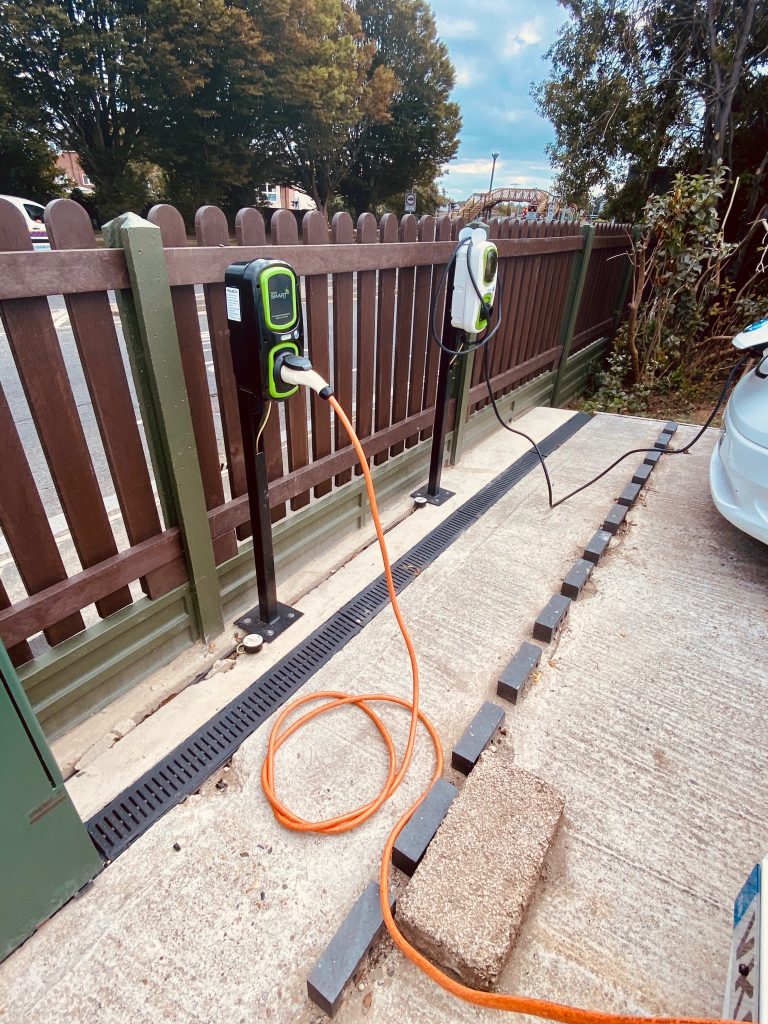
DNO notification for home EV charger installs — what to expect

OZEV-authorised installers notify your distribution network operator (DNO). GOV.UK’s chargepoint connection guidance is that they use the Energy Networks Association process to decide connect and notify after the visit, or apply to connect before work starts.
Awkward or larger supplies can need approval first. A straightforward 7.4 kW driveway job is often notify-after. That is the installer’s call, not a ChargerFit SLA.
We do not file that notice. A typical home DNO fee, and a share of driveways that skip the application are not quoted here.
Whether the charger appears on an Energy Networks Association list is a different question from connect-and-notify versus apply-to-connect. For a normal one-way AC wallbox, that list is usually not the test. It matters for DC-coupled charge points and for vehicle-to-grid units. Does my EV charger need to be on an ENA list? is the matching page. An installer can still decline a unit for other reasons. Ask them which reason applies.
Get a quote. We pass the enquiry to opted-in OZEV-authorised electricians. We do not promise a number of quotes, a reply time, or a public installer list.
This is not your energy supplier
The DNO owns the local wires and the cut-out. Your energy supplier is who you pay for units. Telling Octopus or British Gas you bought a wallbox is not the same filing.
It is also not planning permission, and it is not an OZEV grant. How to get a charger installed keeps those three jobs separate. A grant eligibility email does not replace a DNO application if the installer says you need one.
GOV.UK points to the ENA Who’s my network operator? tool if you want the name of the DNO. The electrician still makes the filing.
Connect-and-notify versus apply-to-connect
For a single home chargepoint, GOV.UK says you discuss it with a chargepoint installer. They assess whether the DNO needs to be informed before or after the visit. The ENA flowchart is what they follow. That process tells them whether the connection can be completed before involving the DNO.
- Connect and notify — they fit the unit, then tell the DNO. A straightforward 7.4 kW driveway job is often this path. We do not print that as a rule for every house.
- Apply to connect — they wait for the DNO before they energise the new load. Looping, an awkward cut-out, a board they will not add a 32 A circuit to, or a larger supply can put you here.
Whether the fuse box needs work is a consumer-unit survey. That is not the same decision as the DNO path, though a full or unsafe board is one reason the installer may refuse to proceed.
Installing it yourself does not skip the filing. The person who certifies the circuit is the person who should notify the DNO.
Legal metre limit, a maximum-demand number you can read off this page, or a 28-day ChargerFit clock are not quoted here.
When a new or upgraded connection is required
If the installer or the network operator decides the existing service cannot take the load, GOV.UK describes a connection application, not a driveway notify-after.
On that path, GOV.UK says the DNO issues a connection quote from 5 to 65 working days depending on connection size, and the customer then has 90 days to accept or reject the offer. Smaller connections that join an existing street cable can be weeks; large ones can be months. Those bands are for a new or upgraded connection. They are not a typical 7.4 kW notify-after clock, and they are not a ChargerFit SLA.
From 1 April 2023, GOV.UK says demand connection customers — including EV chargepoints — applying for a connection are no longer charged for distribution network reinforcement. You can still be charged for electrical equipment solely for your own use. A typical home figure for that line is not quoted here. Ask the electrician what they priced, and read the DNO offer if one is issued.
Hidden costs is the matching page for cable runs, consumer-unit work, and outbuilding routes. DNO work on an awkward supply is one of those extras. It should be included or excluded in writing.
7.4 kW is not the same job as 22 kW
Most current catalogue rows are 7.0–7.4 kW. Two current rows are listed at 22 kW: NexBlue Edge and Easee Charge. Both taglines say they are for three-phase supplies. See 7 kW vs 22 kW.
A 22 kW-rated wallbox does not turn a single-phase house into a three-phase site. If the electrician talks about a supply upgrade, that sits with them and sometimes the DNO. We do not publish a pounds figure for that work.
What a useful quote should name
A vague “7 kW unit, subject to survey” still hides the extras. What to expect from the quote is the list of lines to ask for.
Ask them to say, in writing:
- Whether they have assessed connect-and-notify or apply-to-connect
- Whether any DNO application, upgrade, or unlooping is included or excluded
- The charger model, the cable run they priced, protective devices, consumer-unit work, certification, VAT, and anything they will not do
Photos of the consumer unit with the cover off, and of where the car parks, are usually enough for a first look. They should still confirm the cut-out and the tails on the day.
Compare itemised lines if more than one opted-in installer replies. There is no ChargerFit SLA that you will get three quotes.
On the day
What actually happens on install day covers the circuit, tests, and the BS 7671 certificate. Ask for that certificate, and for confirmation that the DNO notification has been or will be filed. A green LED is not the filing.
If something is outstanding — a fuse-board part, a DNO hold — they should say so before they leave.
What this means when you send the form
Send the two photos. Name the charger if you already picked one. Name anything you already know about a looped supply or a previous DNO visit.
How it works is the matching path. You book and pay the electrician. No deposit, no escrow, no promised reply time, and no public installer directory. We do not file the DNO notice for you.