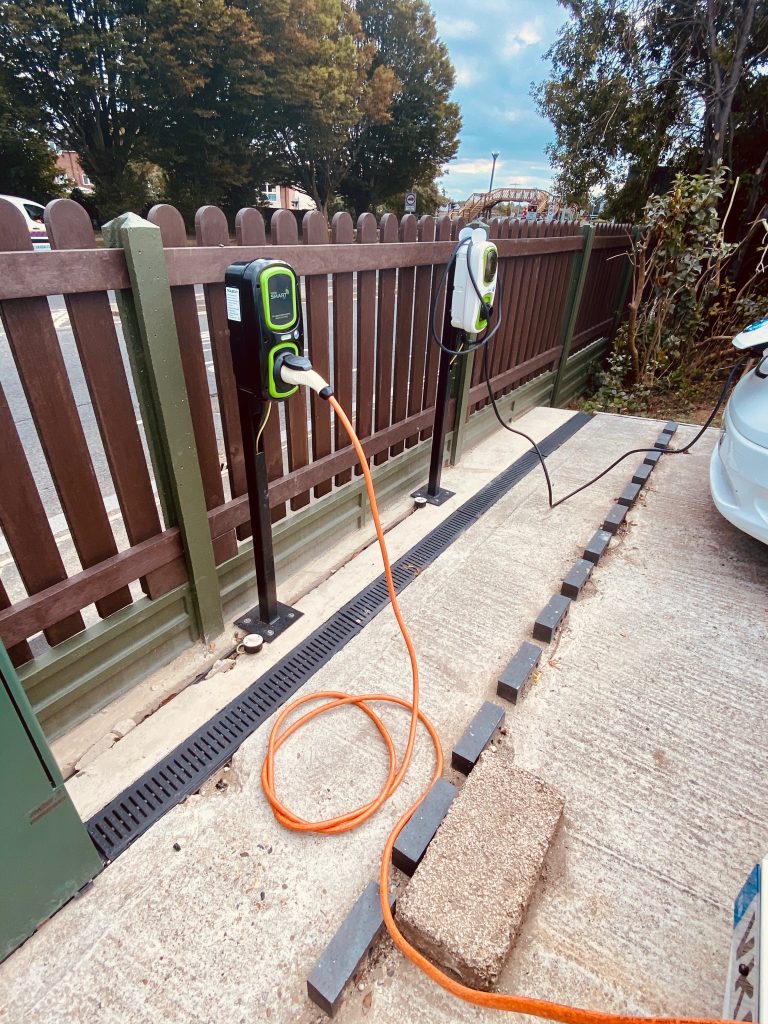
Hidden costs of EV charger installation — what to watch out for

The extras that catch people out are a long or buried cable, a consumer unit that cannot take a dedicated circuit, outbuilding runs, and DNO work on awkward supplies. None of those have a ChargerFit price list.
Ask the installer to say on the quote whether those are included or excluded. Get a quote. We pass the enquiry to opted-in OZEV-authorised electricians. We do not promise a number of quotes, a reply time, or a public installer list.
What a useful quote should name
A vague “7 kW unit, subject to survey” hides the extras. What to expect from the quote is the list of lines to ask for: the exact model, the cable run they priced, protective devices, whether consumer-unit work is included or excluded, certification, DNO notification, VAT, and anything they will not do.
Upgrade bands, labour ladders, or a typical UK fitted total are not quoted here. If a line is missing, ask before you book.
Cable run
How far the charger sits from the fuse box is a design question, not a printed metre limit. Voltage drop, cable size, and the route (surface, cavity, or buried) are what the electrician prices.
A photo of the consumer unit with the cover off, and a photo of where the car parks, is usually enough for a first look at that run. They should still confirm it on the day against the real wall. We do not publish a cost ladder by metre count.
Consumer unit
Catalogue home units are listed at 7.4 kW. That is a 32 A single-phase circuit on a typical UK house. If the board is full, damaged, or not suitable, the electrician should say so on the quote.
Whether the fuse box needs work is their survey, not a ChargerFit rule. Share of homes that need an upgrade, or a pounds band for that line are not quoted here.
Outbuildings and awkward supplies
A charger on a detached garage or an outbuilding is a different route from a short garage-wall job. Buried or long runs should be included or excluded in writing. That is still the same dedicated circuit, not a second product we sell.
OZEV-authorised installers notify the distribution network operator. Awkward or larger supplies can need approval before work starts. A straightforward 7.4 kW driveway job is often notify-after. That is the installer’s call — see DNO notification. We do not promise a filing SLA.
Catalogue RRP is not the fitted total
If you already picked a wallbox from the catalogue, say so. Catalogue From figures are hardware RRP, not a fitted total. The electrician still prices the circuit, the route, and any board work.
A 22 kW unit needs a three-phase supply most UK houses do not have. See 7 kW vs 22 kW.
Grants in 2026
From 1 April 2026 the live GOV.UK chargepoint schemes pay up to £500 per socket (75% of the cost, capped at £500). Funding is confirmed until 31 March 2027. See current GOV.UK rules.
You may qualify if you rent, own and live in a flat with private off-street parking, are a residential landlord, or only have on-street parking and are fitting a cross-pavement solution. Owner-occupiers in houses with a driveway are not on those home schemes.
The grant is a GOV.UK process, not a line we deduct. See who still qualifies. Do not have the charger installed until OZEV has confirmed you are eligible.
What this means when you get a quote
Send the two photos. Compare itemised lines if more than one opted-in installer replies. There is no ChargerFit SLA that you will get three quotes.
How it works is the matching path. You book and pay the electrician. No deposit, no escrow, no promised reply time.