Can landlords get grants for EV charger installation?
Yes, if you qualify for the residential landlord chargepoint grant. From 1 April 2026 that live GOV.UK scheme pays 75% of the cost of buying and installing chargepoints, up to £500 per socket, for up to 200 sockets per year. Those sockets can sit on one property or several. The old £350 figure is out of date. Funding is confirmed until 31 March 2027.
That is a different GOV.UK form from the flats-and-renters grant a tenant might use, and from the on-street grant. Who still qualifies is the overview. This page is the landlord form.
Read the GOV.UK landlord grant before you spend money. Typical landlord fitted total, a “most buy-to-lets qualify” rate, or a per-room charger grant are not quoted here.
Get a quote. We pass the enquiry to opted-in OZEV-authorised electricians. We do not promise a number of quotes, a reply time, or a public installer list. We do not apply for the grant, and we do not deduct it on a ChargerFit invoice, because we do not sell the install.
This is not the old homeowner grant
The original Electric Vehicle Homecharge Scheme for owner-occupiers in houses closed in 2022. That has not been reopened.
GOV.UK’s landlord eligibility page says you cannot apply on this form if you live in the property. A live-in landlord asking for “their” driveway unit is usually on the wrong scheme. If the person who lives there rents, can renters get a charger? is their form, not yours.
Who GOV.UK treats as a residential landlord
You can only apply if you are a residential landlord who owns or manages flats, houses or apartment blocks, and the property is in the UK. Channel Islands and the Isle of Man are out. The grant is for existing properties, not buildings still being built.
GOV.UK says you or the organisation you represent are a residential landlord if you own or manage:
- a property that is let for people to live in (for example a flat)
- a property that has multiple units in it where people live (for example a block of flats)
- the common or communal spaces of a multi-unit property (for example an apartment block or a housing estate)
You can apply if you are an individual with property to let, a right-to-manage (RTM) company, a residents’ management company (RMC), a company or person owning the freehold of a multi-unit property, a company owning the common areas, a registered provider of social housing, a public-sector organisation, a charity that manages or owns residential property, or a property management company that represents a landlord.
You must also be one of: registered at Companies House, VAT registered, or on the register of social housing providers. How many private landlords meet that registration test is not stated here. Check GOV.UK.
If organisations sit under common control (a parent, a holding company, or a controlling person), GOV.UK says the group shares the 200-socket yearly cap. It is not 200 sockets per company in the group.
Who cannot use this form
GOV.UK lists these as out:
- You live in the property.
- The property is not residential.
- The chargepoint is already installed. The unit must not go in before OZEV confirms you are eligible.
- The property is only used for holiday accommodation. See holiday lets and second homes.
- You are fitting a chargepoint for a new-build or another mandatory requirement, such as Building Regulations or a planning condition.
The Workplace Charging Scheme is a different product (up to 40 sockets). A shop, office, or other business-rates let is not this residential form.
An HMO is still a landlord problem — parking rights, load on the supply, and who applies. A p-room charger grant or that every HMO automatically fits the residential definition are not quoted here. Check the live GOV.UK wording for that property.
The parking space still has to be private
Each parking space on the application must be off-street, private and clearly defined. It does not have to sit on the same title as the building. It must be accessible to your tenant, and owned by you or one you have the legal right to.
A visitor bay or an unallocated communal space is not that. A flat is the matching page if the question is an allocated bay versus a shared car park. If the only bay is on-street, this landlord grant is the wrong scheme — installing without a driveway is the cross-pavement form.
GOV.UK says some jobs need cables or parts across private or public land, and you must have proof of those rights before work begins. We do not file those consents.
What closed on 31 March 2026
These schemes closed to new customer applications on 31 March 2026:
- the commercial landlord chargepoint grant
- the residential landlord infrastructure grant
The closed infrastructure grant was a different product: multi-home sites, work on at least five parking spaces, and GOV.UK said it was not available for holiday rentals. Do not plan a new job around those rates, the old £350 socket cap, or a £30,000 infrastructure band.
How you apply
On 1 April 2026 this grant moved to a new GOV.UK application platform. You apply there. The installer portal is closed to new customer applications.
GOV.UK’s apply page says, before you apply, you must complete any necessary electrical-supply upgrades, arrange regular maintenance checks, decide how electricity and running costs will be paid, make sure the chargepoints are accessible, update the property’s risk assessment, and be ready to put in place and maintain appropriate fire safety measures. That is the applicant’s duty, not a ChargerFit service pack. An inspection interval or a fire-safety product are not quoted here.
You can apply for multiple sockets at the same address. If you use more than one installer, or apply for more than one address, submit a separate application for each.
The steps GOV.UK lists are:
1. Contact an OZEV-authorised installer and get a quote.
2. Agree what work will be carried out before you apply.
3. Choose a model from the eligible chargepoint list.
4. Complete the online application.
Documents must be in the name of the organisation or business applying. GOV.UK asks for the installer’s quote; a Land Registry title register if you are the freeholder of a multi-unit property; and, for a private landlord or a charity letting a property, a dated insurance policy that shows the address and that the property is a rental. RTM and RMC applicants need Companies House evidence and a document verifying the appointment. A property manager applying for a landlord needs the letter of appointment plus the evidence for that landlord type.
If the application is successful, OZEV emails you and the installer. Do not have the charger installed until you have that eligibility notice. Installing first invalidates a later offer. The installer then claims. You do not get a cheque from ChargerFit.
Authorised installer and eligible model
GOV.UK’s grant terms are plain: you must use an authorised installer, and the chargepoint must be an eligible model.
A row in our catalogue is not automatically grant-eligible. Andersen A2 is listed on ChargerFit but is not marked residential-eligible because it is not an exact match on the OZEV list dated 5 August 2026.
Can a regular electrician install an EV charger? is the matching page for OZEV authorisation versus NICEIC or NAPIT. We only pass opted-in OZEV-authorised electricians. That is not a public roster of every electrician near the let.
What a useful quote should name
A vague “7 kW unit, subject to survey” still hides the extras. What to expect from the quote is the list of lines to ask for: the exact model, the cable run and the route they assumed, protective devices, whether consumer-unit work is included or excluded, certification, DNO notification, VAT, and anything they will not do.
If you need the grant, also ask them to confirm they are OZEV-authorised and that the SKU they priced is on the live eligible-model list. We do not check that for you from this page.
Catalogue From figures are hardware RRP, not a fitted total and not the grant. Most current rows are 7.0–7.4 kW. A 22 kW unit needs a three-phase supply most UK houses do not have — see 7 kW vs 22 kW.
Compare itemised lines if more than one opted-in installer replies. There is no ChargerFit SLA that you will get three quotes.
Tax is a different question
Is EV charger installation tax deductible for landlords? is the matching page. We do not give tax advice. A grant is not a capital-allowance ruling.
What this means when you send the form
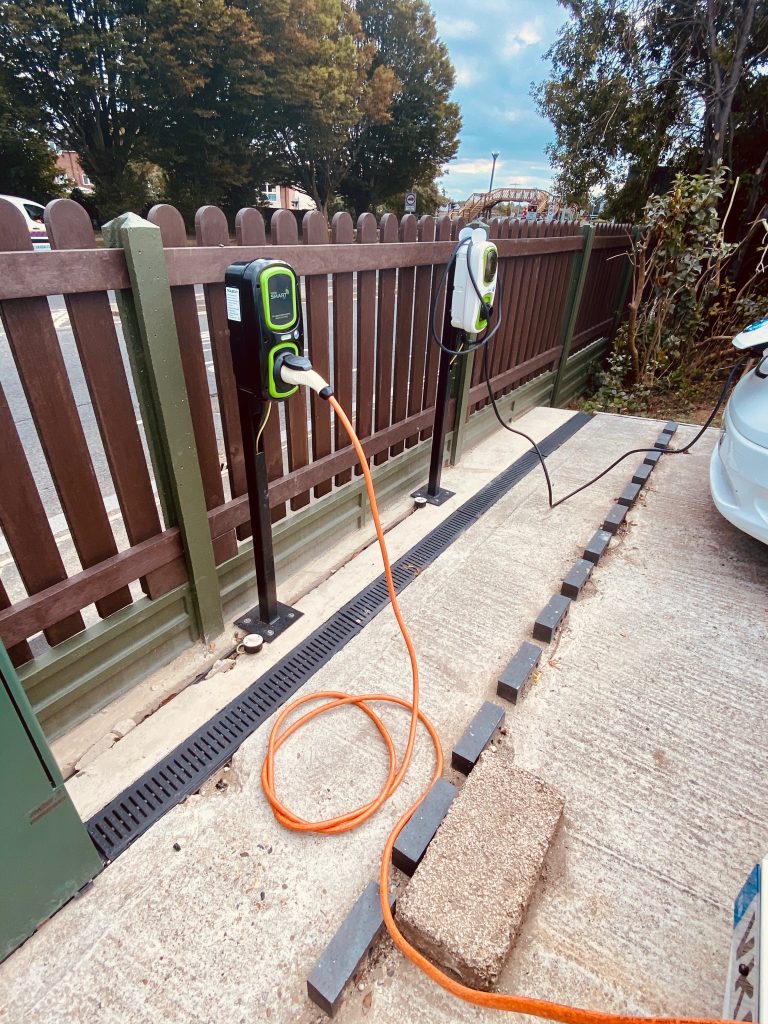
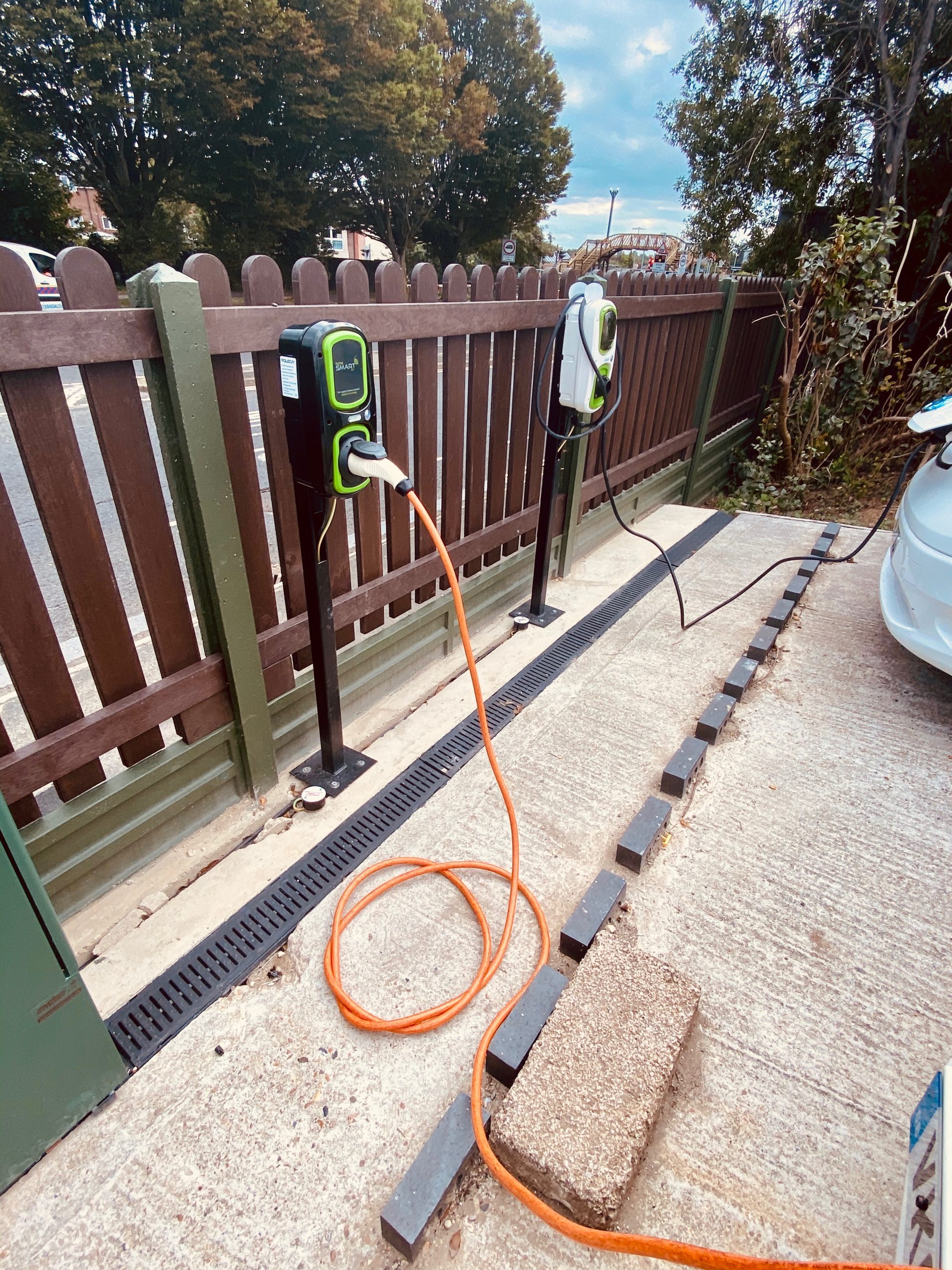
Send the two photos. Name that this is a let, a block, a communal car park, or a single driveway. Name the charger if you already picked one.
How it works is the matching path. You book and pay the electrician. No deposit, no escrow, no promised reply time, and no public installer directory. Apply on GOV.UK.