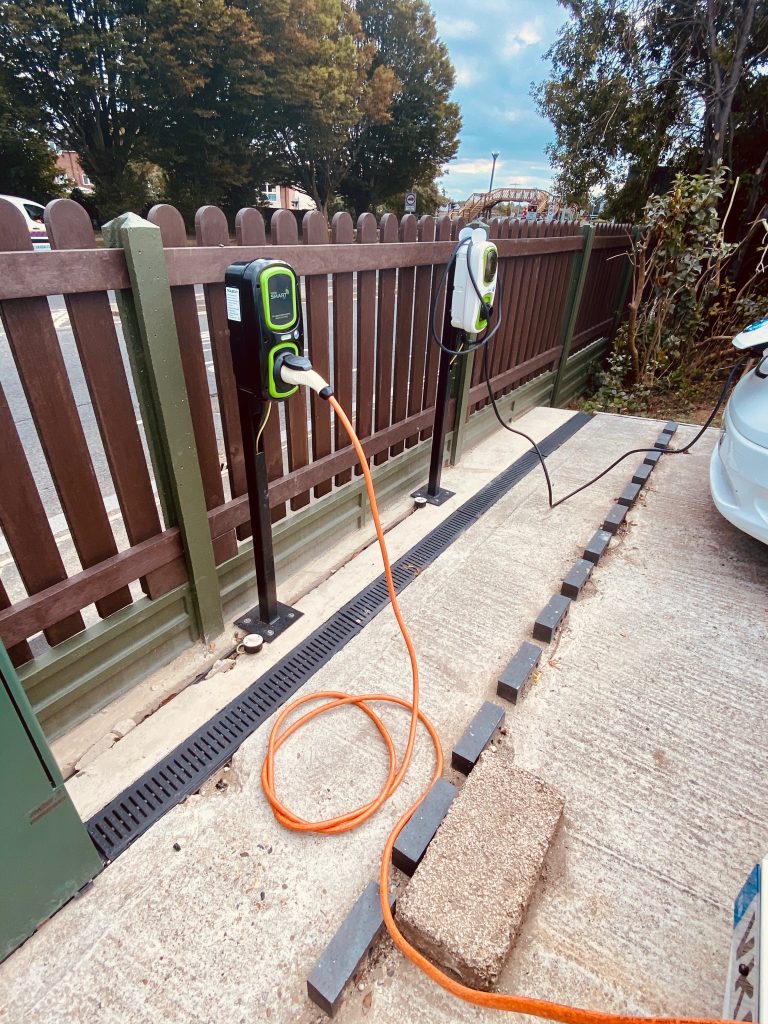
Can renters get an EV charger installed?
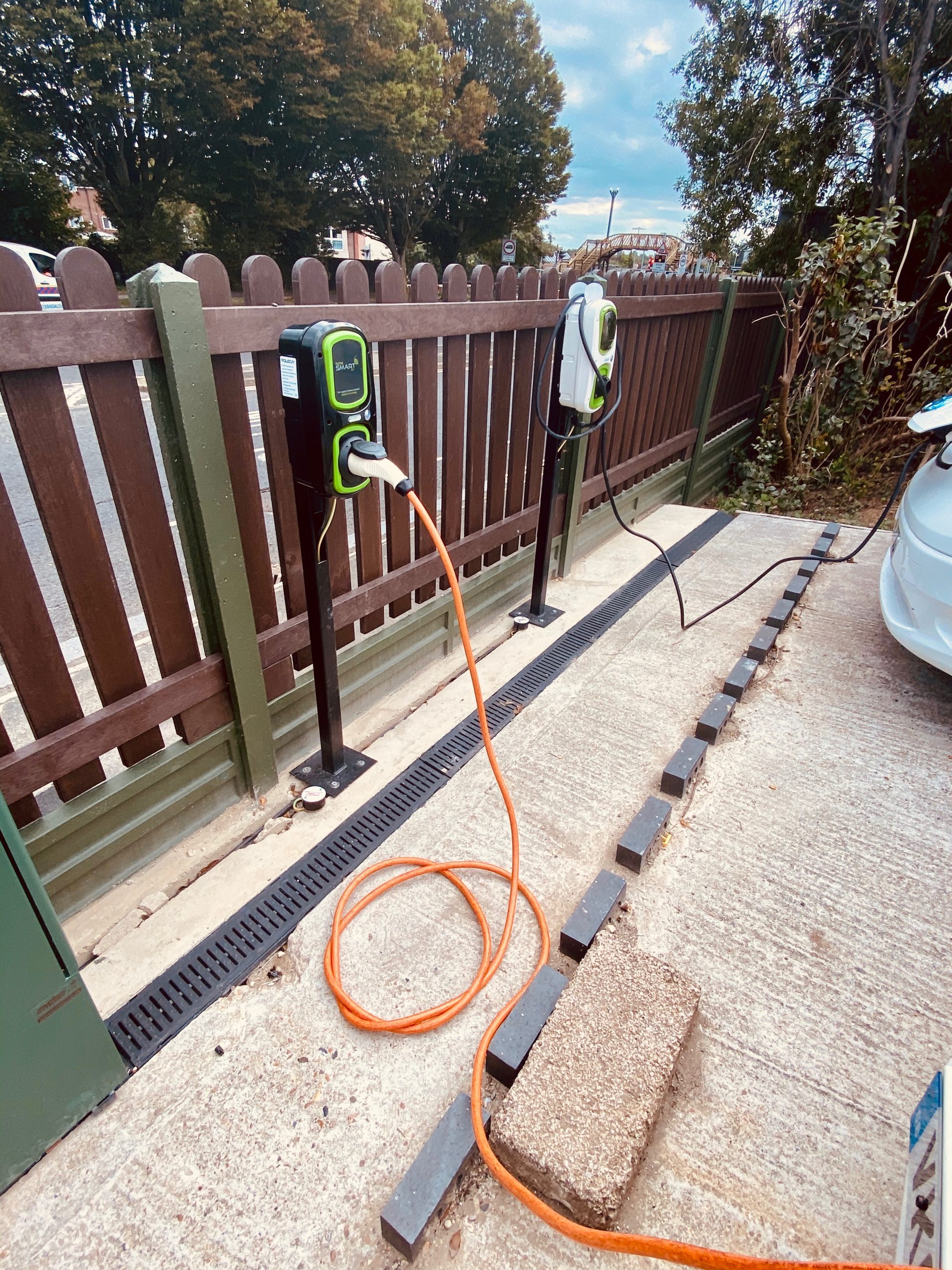
Yes, with the landlord’s written permission and a parking place the cable can reach. There is no automatic legal right in a standard tenancy to add a wallbox. Ask in writing.
Renters who live in a residential property and have private off-street parking are one of the groups the live GOV.UK flats-and-renters grant is aimed at. From 1 April 2026 that scheme pays 75% of the cost of buying and installing a chargepoint, up to £500. Residents can apply for one socket. Funding is confirmed until 31 March 2027. The old £350 figure is out of date.
That is a different GOV.UK form from the landlord grant and from the on-street grant. Who still qualifies is the overview. This page is the renter’s form.
Read the GOV.UK household grant before you spend money. Typical renter fitted total, a “most landlords say yes” rate, or a tenancy-right that is not in your agreement are not quoted here.
Get a quote. We pass the enquiry to opted-in OZEV-authorised electricians. We do not promise a number of quotes, a reply time, or a public installer list. We do not apply for the grant, and we do not deduct it on a ChargerFit invoice, because we do not sell the install.
Written consent is not planning permission
Landlord consent is the first gate. Do I need permission? is the matching page for England permitted development, listed-building consent, and leasehold. A grant eligibility email does not replace the landlord’s letter.
If the home is a flat, can you get a charger in a flat? is the matching page for allocated bays, communal car parks, and freeholder consent. You may still need the freeholder or the managing agent as well as the landlord.
If you are the landlord, stop here: can landlords get grants? is your form, not this one. GOV.UK’s landlord eligibility page says you cannot use that form if you live in the property.
Who the flats-and-renters grant is for
GOV.UK’s household eligibility page says you can apply if all of these apply:
- You live in a flat that you own (including shared ownership), or you rent a residential property.
- Your home has its own private off-street parking space.
- You own or use an eligible vehicle.
The property must be in the UK. Channel Islands and the Isle of Man are out. You can only apply for an existing residential property that you live in. Empty homes and homes still being built are out.
You will need supporting evidence. GOV.UK names a rental agreement if you rent.
How many private tenancies have a parking clause that lets you add a wallbox is not stated here. Check the agreement and ask in writing.
Who cannot use this form
GOV.UK lists these as out:
- You live in a house that you own — unless that house has been converted into flats and you live in one of them. Owner-occupiers in a house with a driveway are not on this scheme.
- You rent accommodation where the landlord or homeowner lives — for example you are a lodger.
- You are moving house or planning on moving.
- You have already claimed this grant, or its predecessors (the Electric Vehicle Homecharge Scheme and the Domestic Recharge Scheme).
- There must by law be a chargepoint or charging infrastructure — for example a new-build under Building Regulations.
A holiday let you do not live in is not this form. An HMO room is still a consent and parking problem. Do not assume that every shared house automatically fits the “rent a residential property” test. Check the live GOV.UK wording for that tenancy.
The parking space still has to be private
GOV.UK says the space must be:
- off-street, private and clearly defined — it does not have to sit on the same title as the home
- accessible to you at all times
- one you own or have the legal right to
You must have proof of those legal rights and permissions. In a block that often means the freeholder as well as the landlord.
A visitor bay or an unallocated communal space is not that. A flat is the matching page if the question is an allocated bay versus a shared car park. If the only bay is on-street, this grant is the wrong scheme — installing without a driveway is the cross-pavement form.
The installer assesses whether that space lets a vehicle charge safely. We do not override that from this page.
The vehicle has to be on OZEV’s list
This grant is only for vehicles on the list of OZEV-approved electric vehicles. We do not reprint that list.
GOV.UK says you must show that you own or use an eligible vehicle:
- as a registered owner
- if you have leased one for at least 6 months
- if you have used one as a work vehicle for at least 6 months
- if you currently have one on order
If the vehicle lease is bundled with a chargepoint, GOV.UK says the lease must say you own the chargepoint once payment is complete, and must list the cost of the unit and installation including VAT. The chargepoint warranty must meet the grant requirements, and that vehicle lease must still be at least 6 months. Show the installer the lease. We do not check the bundle for you.
How you apply
On 1 April 2026 this grant moved to a new GOV.UK application platform. You apply there. The installer portal is closed to new customer applications.
Start from the household grant page. If the application is successful, OZEV emails you and the installer. Do not have the charger installed until you have that eligibility notice. Installing first invalidates a later offer. The installer then claims. You do not get a cheque from ChargerFit.
A grant is not a discount we apply.
Authorised installer and eligible model
GOV.UK’s grant terms are plain: you must use an authorised installer, and the chargepoint must be an eligible model.
A row in our catalogue is not automatically grant-eligible. Andersen A2 is listed on ChargerFit but is not marked residential-eligible because it is not an exact match on the OZEV list dated 5 August 2026.
Can a regular electrician install an EV charger? is the matching page for OZEV authorisation versus NICEIC or NAPIT. We only pass opted-in OZEV-authorised electricians. That is not a public roster of every electrician near the let.
What a useful quote should name
A vague “7 kW unit, subject to survey” still hides the extras. What to expect from the quote is the list of lines to ask for: the exact model, the cable run and the route they assumed, protective devices, whether consumer-unit work is included or excluded, certification, DNO notification, VAT, and anything they will not do.
If you need the grant, also ask them to confirm they are OZEV-authorised and that the SKU they priced is on the live eligible-model list. We do not check that for you from this page.
A photo of the consumer unit with the cover off, and a photo of where the car parks, is usually enough for a first look at that run. They should still confirm it on the day against the real wall.
Catalogue From figures are hardware RRP, not a fitted total and not the grant. Most current rows are 7.0–7.4 kW. A 22 kW unit needs a three-phase supply most UK houses do not have — see 7 kW vs 22 kW.
Compare itemised lines if more than one opted-in installer replies. There is no ChargerFit SLA that you will get three quotes.
How much an install costs is still itemised by the electrician, not by ChargerFit. A “r” add-on is not quoted here.
What this means when you send the form
Send the two photos. Name that you rent, who has agreed the bay and the route — or that you have not asked yet — and whether the parking is an allocated bay, a private driveway, a communal car park, or on-street only. Name the charger if you already picked one.
How it works is the matching path. You book and pay the electrician. No deposit, no escrow, no promised reply time, and no public installer directory. Apply on GOV.UK.